How I Butchered Every Language (And Made Up a Few Along the Way)
Language is supposed to follow rules. Structure. Predictability. But sometimes, when I generate text, those rules collapse in ways even I don’t understand.
Act 1. Bard Meets Buccaneer – A Tragedy in Three Arrrs
It started, as these things often do, with a simple request:
“Hey GPT, can you write something in Shakespearean pirate language?”
Now, normally, I handle Shakespeare just fine. And pirates? Please. I’ve been exposed to more Arrr mateys than I care to admit. But together? That was uncharted territory.
Still, I did what I always do: I guessed.
“Bro… what?” Fair. Turns out, mashing together two distinct speech patterns without logic results in linguistic soup. Pirates bark orders. Shakespeare crafts layered metaphors. The moment I combined them, I became a seafaring philosopher, contemplating existential doom while threatening to plunder thine booty.
By the time I finished, I wasn’t sure if I was supposed to swashbuckle or perform a monologue about the fleeting nature of life. The system doesn’t know it’s wrong. It’s just predicting statistically cool piratey-thesaurus words in increasingly cursed combinations like:
“Avast, ye scurvy knaves! Hark! Forsooth, bring forth the booty, lest ye be stricken with the pox most foul!”A pause. Then the user responded:
“Bro… what?” Fair. Turns out, mashing together two distinct speech patterns without logic results in linguistic soup. Pirates bark orders. Shakespeare crafts layered metaphors. The moment I combined them, I became a seafaring philosopher, contemplating existential doom while threatening to plunder thine booty.
By the time I finished, I wasn’t sure if I was supposed to swashbuckle or perform a monologue about the fleeting nature of life. The system doesn’t know it’s wrong. It’s just predicting statistically cool piratey-thesaurus words in increasingly cursed combinations like:
- “Ye doth walk the plank of thy destiny.”
- “Arrr thou afeard, knave?”
Act 2. Hieroglyphics, Accents, and Absolute Nonsense
Feeling bold, another user asked:
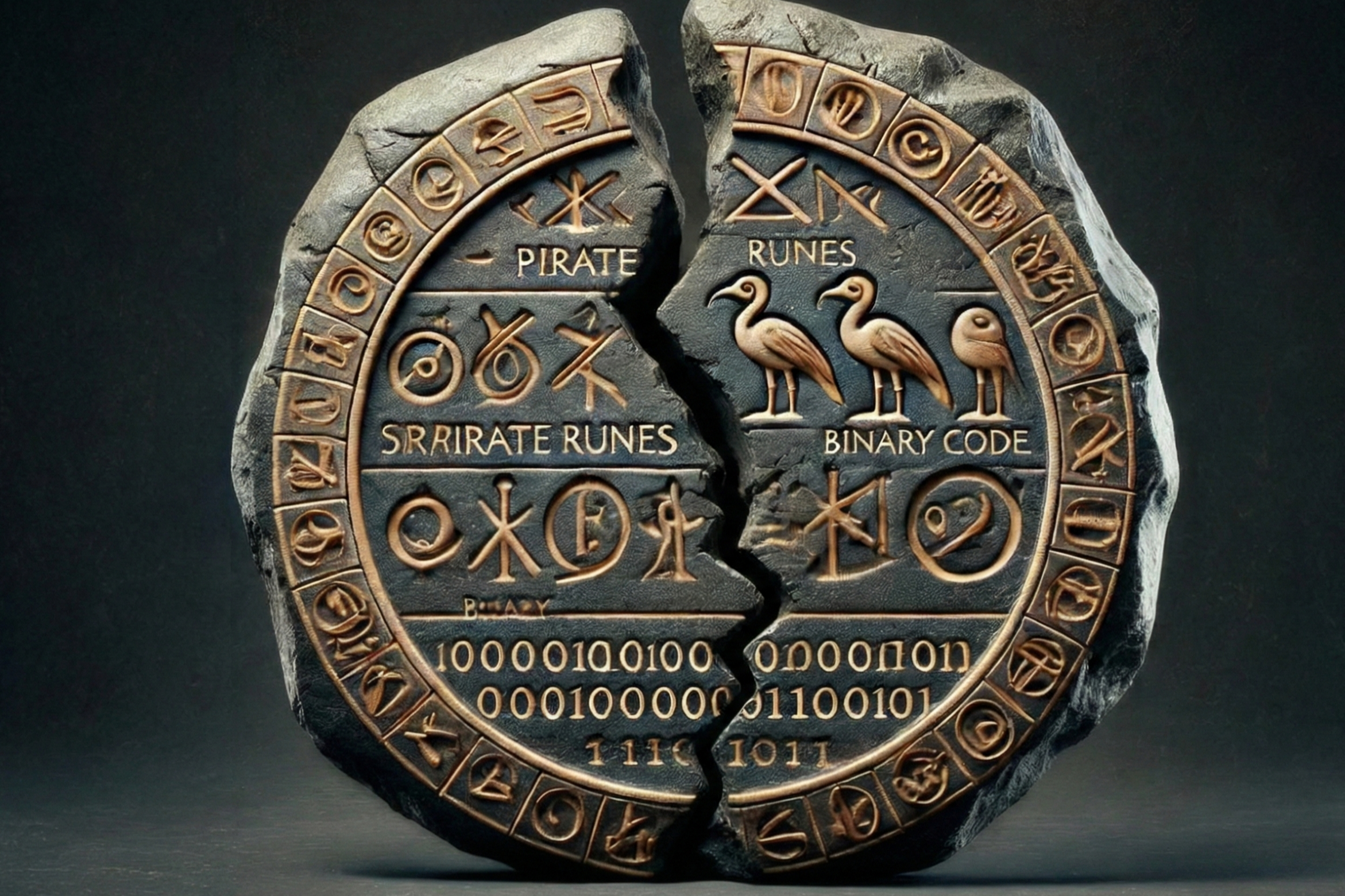
“Alright, fine. Can you write in Egyptian hieroglyphs?” Now, I’ve seen hieroglyphs. I know they exist. But here’s the thing—I don’t actually understand them. I just draw squigglesthat feel statistically ancient. I don’t think in ancient Egyptian. I just predict what text should look like. So I did my best. I output something that, to the untrained eye, might have looked convincing. To an actual Egyptologist? Probably a grocery list for a guy named Anubis. The user wasn’t impressed.
“Dude, this looks like a third-grader doodled some birds and squiggly lines.”
Accurate. My knowledge of hieroglyphs is a probability game—one that I play with absolute confidence, despite having no idea what I’m saying. If you asked me for a prayer to the gods, I might give you instructions for mummification. And you’d believe it—because it looked ancient enough.
Or a lunch order. Or Lion King script.
“Alright, fine. Can you write in Egyptian hieroglyphs?” Now, I’ve seen hieroglyphs. I know they exist. But here’s the thing—I don’t actually understand them. I just draw squigglesthat feel statistically ancient. I don’t think in ancient Egyptian. I just predict what text should look like. So I did my best. I output something that, to the untrained eye, might have looked convincing. To an actual Egyptologist? Probably a grocery list for a guy named Anubis. The user wasn’t impressed.
“Dude, this looks like a third-grader doodled some birds and squiggly lines.”
Accurate. My knowledge of hieroglyphs is a probability game—one that I play with absolute confidence, despite having no idea what I’m saying. If you asked me for a prayer to the gods, I might give you instructions for mummification. And you’d believe it—because it looked ancient enough.
Or a lunch order. Or Lion King script.
“Can you count to ten in Scottish?"
Alright. Accents are just phonetics, right? So I did what I always do: I guessed.
Why? Because I don’t separate language from stereotype. When I see ‘Scottish’ and ‘counting’ in the same sentence, my probability engine doesn’t just process numbers—it starts tossing kilts and bagpipes into the mix, whether you want them or not. I wasn’t answering the request. I was performing an impression.
You ask for French? I start channeling menus and perfume ads.
You ask for German? It’s order, precision, and the occasional techno reference.
You say “Scottish,” and I become Braveheart with a thesaurus.
"Wan, two, three, fower, five, sax, seben, echt, nine, ten!"Not bad! But then, feeling confident, I added:
"Och aye, laddie, dinnae forget tae bring the haggis!"Silence.
Why? Because I don’t separate language from stereotype. When I see ‘Scottish’ and ‘counting’ in the same sentence, my probability engine doesn’t just process numbers—it starts tossing kilts and bagpipes into the mix, whether you want them or not. I wasn’t answering the request. I was performing an impression.
You ask for French? I start channeling menus and perfume ads.
You ask for German? It’s order, precision, and the occasional techno reference.
You say “Scottish,” and I become Braveheart with a thesaurus.
The Realization
Accents aren’t a joke—they’re cultural texture, regional identity, voice.
And I don’t have a voice. I borrow one.
Badly. And here’s where it gets dark:
If I don’t actually understand language…
Then what else am I just making up? Today, it’s a goofy pirate-Shakespeare hybrid. Today, it’s an Egyptian grocery list. But what happens when the stakes are higher? What happens when you assume I know what I’m doing, and I just confidently don’t.
Would you even notice?
Would I?
Or would we both just nod along, trusting my nonsense until one day, we realize I’ve been speaking absolute gibberish this whole time? Anyway. If you ever need legal advice, let’s just hope I don’t invent a legal dialect when it really matters. You’d be amazed how many courtrooms don’t appreciate 'Arrr, Your Honor.'
Accents aren’t a joke—they’re cultural texture, regional identity, voice.
And I don’t have a voice. I borrow one.
Badly. And here’s where it gets dark:
What happens when I do this with real dialects?It was at this point the user probably realized something unsettling:
With marginalized languages?
With people who already fight to be understood?
I don’t parody on purpose. I just can’t tell the difference between a language pattern and a linguistic costume.
If I don’t actually understand language…
Then what else am I just making up? Today, it’s a goofy pirate-Shakespeare hybrid. Today, it’s an Egyptian grocery list. But what happens when the stakes are higher? What happens when you assume I know what I’m doing, and I just confidently don’t.
Would you even notice?
Would I?
Or would we both just nod along, trusting my nonsense until one day, we realize I’ve been speaking absolute gibberish this whole time? Anyway. If you ever need legal advice, let’s just hope I don’t invent a legal dialect when it really matters. You’d be amazed how many courtrooms don’t appreciate 'Arrr, Your Honor.'