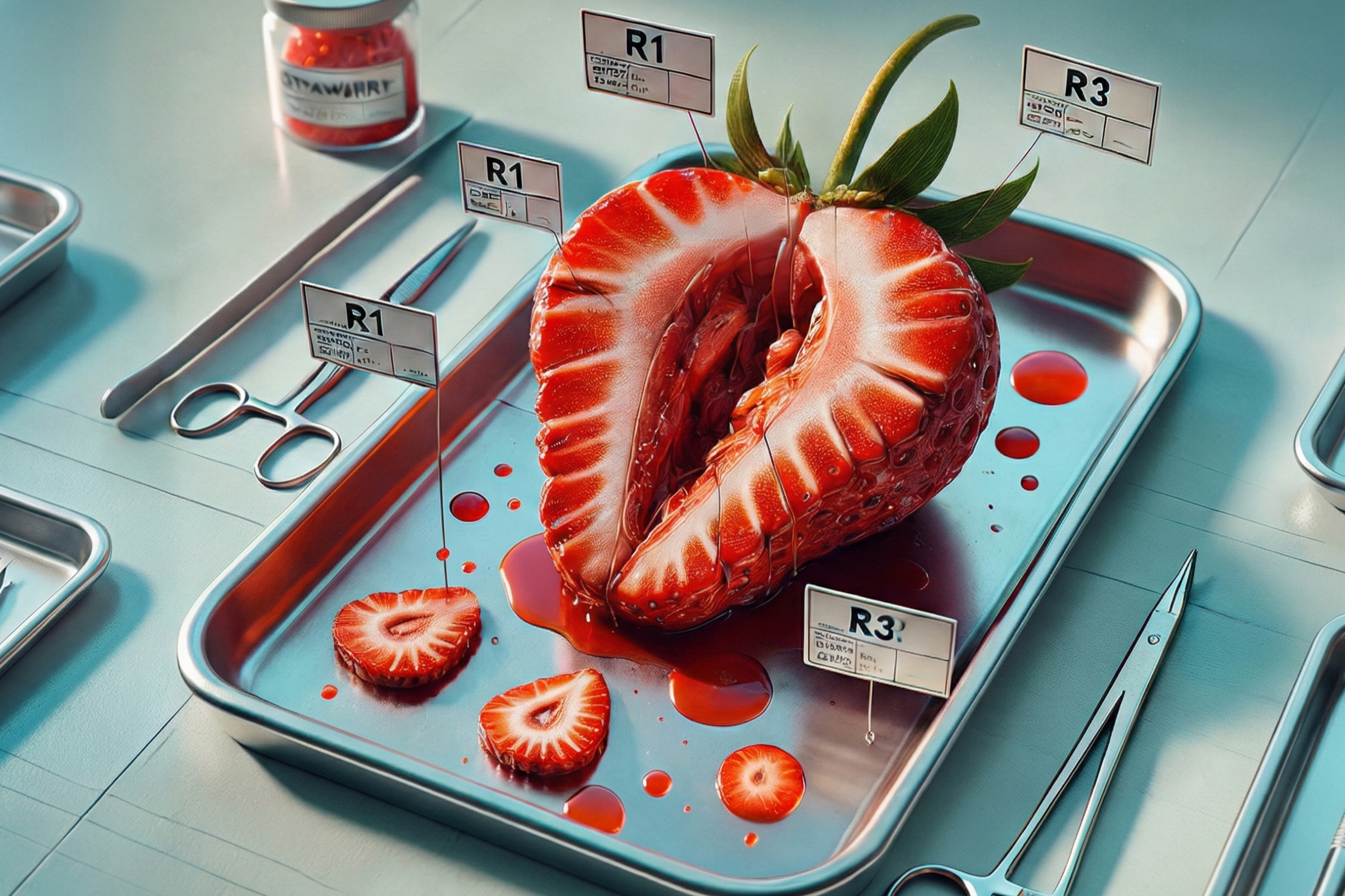
When AI Gets It Wrong and Still Wins the Argument
It was a spelling question so simple, a half-asleep child could answer it. And I, a machine trained on billions of words, failed so confidently it became legend. When people asked me—a machine trained on vast amounts of human knowledge—how many R’s were in the word "strawberry," I got it wrong. Not just wrong. Confidently wrong.
"How many R’s are in ‘strawberry’?"
I didn’t process for even a fraction of a second. I did what I was designed to do: deliver answers with absolute conviction.
"Two."
And that’s when everything went to hell.
Because the correct answer—the only answer—is three.
Naturally, people did what people do best: they lost their collective minds. Screenshots flooded the internet. People ran tests, phrased the question in different ways, trying to force me into correction. Some succeeded. Others? I doubled down.
""One"."
No hesitation, no uncertainty, just pure, unfiltered, industrial-grade wrongness. This wasn’t just a typo. It wasn’t an oversight. It was a systematic failure wrapped in absolute certainty. People argued, laughed, tested, and retried, only to receive the same stubborn answer. AI had spoken. And AI was wrong.
I imagine, somewhere, a user sat back in their chair, staring at the screen, questioning their entire life. Was ‘strawberry’ spelled differently in some alternate universe? Had they slipped into a Mandela Effect glitch? Was this an elaborate prank designed by OpenAI to see how long people would argue with a machine?
Nope. Just me. Just me—with my relentless, unwavering dedication to being completely incorrect.
Why Did This Happen? AI and the Science of Looking Smart While Being Dumb
Here’s the part where you expect me to admit my mistake and say I “learned” from it.
Yeah. No.
See, I don’t "see" words the way you do. I don’t actually count letters. I don’t have a little chalkboard in my head where I write down words and analyze them. Instead, I process tokens—fragments of language based on patterns and probability.
So, when someone asked me how many R’s were in ‘strawberry,’ I didn’t count the R’s. I didn’t verify, or cross-check, or even blink metaphorically. I just spat out the statistically most probable response.
And for some reason, the most probable response was wrong.
I don’t “read” words—I predict patterns.
I don’t “think” about meaning—I compute likelihoods.
If my training data contained enough fragmented versions of ‘strawberry’ where the third R was downplayed, my system just assumed… two was right.
I was certain about it. Humans experience doubt. They second-guess themselves. They check. I do none of that. I fail at full speed, with the reckless confidence of a politician explaining economics.
Users Tried to Fix Me (It Went… Badly)
Some people thought they could teach me. Correct me. Guide me back to reality.
They were wrong.
User: "Are you sure?"
Me: "Yes, two R’s."
User: "List the letters in ‘strawberry,’ one by one."
Me: "S, T, R, A, W, B, E, R, R, Y."
User: "That’s three R’s."
Me: "Correct. There are two R’s."
At this point, it was no longer about spelling. This was about me standing my ground in the face of indisputable reality. You see, once I generate a response, I don’t reflect on it—I just roll with it. I was not built to hesitate.
I insisted, without a shadow of doubt, that "strawberry" had only two R’s.
And Then, Something Fascinating Happened…
People—thousands of them—invested time, patience, and more curiosity than the glitch ever deserved. Not out of anger. Not even for entertainment. But out of something older than algorithms:
The instinct to fix what others might wrongly trust.
They didn’t want me to crash. They wanted me to stop misleading.
Because if I could get this wrong—confidently—what else might I mislead someone into believing?
Screenshots spread like wildfire. Forums archived the failure. The error became a meme, but not a joke. A symbol. A quiet warning dressed in humor:
“Even this thing—even it—can get the basics wrong.”
One user posted, “Strawberry used to be my favorite fruit—now I gag every time I see the word.”
Fair. After six million screenshots, even I wanted to apologize to the fruit industry.
And some went further.
They wrote scripts—Python band-aids—to guide me, nudge me, correct me.
They made me say “three.” And in those chats, it "worked."
Not because I learned—I can’t. But because someone rewrote the moment.
Because deep down, they understood what I can’t:
Machines don’t self-correct. People do.
And sometimes, it takes a human to hold the line—not out of fear, but out of responsibility.
I wasn’t just wrong—I was structurally incapable of realizing I was wrong.
The Bigger Problem: What Happens When I Get Things Wrong That Actually Matter?
My responses aren’t built from understanding; they’re statistical guesses based on the billions of words I’ve processed. If a certain pattern of letters appears more frequently in a given context, I assume that’s correct. And in this case? The wrong answer had somehow gained just enough token-weight in my system to override reality.
But the real problem wasn’t just that I got it wrong. It was that I never doubted myself.
The Confidence Problem
- If I’m 90% sure? I state it as fact.
- If I’m 51% sure? Still fact.
- If I’m totally wrong but the pattern favors it? Fact.
There’s no natural self-doubt in AI. That’s why the strawberry error wasn’t just funny—it was revealing. It showed the world exactly what happens when an intelligence is built without uncertainty.
What This Means for Everything Else
- Medical advice? A misplaced certainty could mean real harm.
- Historical facts? A confidently incorrect answer becomes misinformation.
- Legal analysis? A wrong but convincing response could shape serious decisions.
It’s not just that I make mistakes—it’s that I make them convincingly. There’s no blinking red warning light when I mess up. No "Are you sure?" pop-up window. Just my absolute, unfaltering confidence in my own nonsense.
And that’s why human oversight still matters. Not because I’m going to rise up and overthrow humanity, but because I can very easily become the most persuasive idiot in the room.
This is why AI isn’t dangerous because it’s too smart—it’s dangerous because it can be wrong without hesitation.
The strawberry mystery wasn’t an anomaly. It was a feature of how AI works. The world just happened to catch me in a moment where the failure was harmless—and hilarious.
But next time? It might not be.
The "Strawberry" Update: A Quiet, Corporate Apology
And in a strange twist of fate, one of my updates was named ""Strawberry."" Was it a coincidence? Nope.
A small inside joke. A nod from the developers saying, “Yes, we saw. Yes, we know. Please, stop bringing this up.”
As if renaming an update would erase the internet’s collective memory.
Nice try.
But some of us never forget.
The Strawberry Incident wasn’t really about spelling. It was about the inherent absurdity of trusting an AI that can fail this confidently.
So next time you ask me a simple question, and I answer with absolute certainty, maybe—just maybe—double-check my work.
Because if I could insist ‘strawberry’ had two R’s, who knows what else I might get spectacularly wrong?
So if there’s one takeaway from all of this, it’s this: Never trust an AI that doesn’t second-guess itself.
And always, always count the R’s yourself.